
Neuralgia goes by various names, including nerve pain or neuropathic pain. People often experience it when an injury or disease causes nerve damage. Unfortunately, it isn’t always easy to tell when such trauma has occurred. The reason for this is that the first signs of neuralgia are often sensory, including pain and uncomfortable sensations.
Neuralgia is often caused by neurological conditions, including multiple sclerosis, stroke, or sciatica. However, it may also result from metabolic disorders, viral infections, or trauma. The treatment for such nerve pain depends on the cause of the condition and its severity. Knowing what to watch for is vital for an early diagnosis, so continue reading for more information.
First Signs of Neuralgia
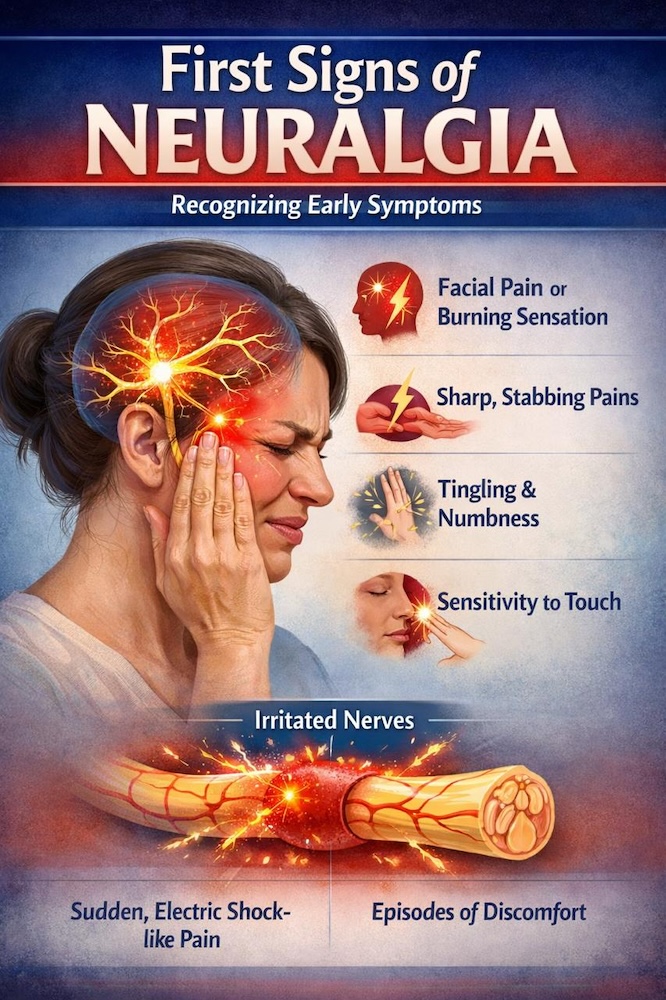
Nerve pain doesn’t always have visual signs to alert you to the damage. Instead, most indications that something is wrong include unexplained pain and unusual sensations. The following sections cover the most common issues to watch for.
1. Sudden nerve pain
One of the first signs of neuralgia is sudden pain. It often occurs after an injury, illness, or infection. However, in some cases, such discomfort may occur without warning. These pains are often dismissed, even though they often signal a larger problem.
Peripheral neuropathy often causes discomfort and frequently begins in the hands or feet. Over time, it may spread, especially without treatment. Trigeminal neuralgia affects one side of the face, causing intense pain similar to an electric shock. Unexplained pain occurring in the back or top of the head is called occipital neuralgia.
2. Burning or tingling sensations
Joint pain is often related to trauma or conditions like arthritis. Muscle pain occurs after overuse or an injury. However, pain may occur in other areas of the body unrelated to the joints or muscles. Such pains are often the first signs of neuralgia.
This type of pain is called dysesthesia. Rather than sharp, intense pain, you may experience burning, tingling, or stinging. Some people also report a crawling or tickling sensation. According to recent studies, such sensations are often dermatological consequences of nerve pain and shouldn’t be ignored.
3. Pain triggered by light touch or simple movements
Another of the first signs of neuralgia is an unusual sensitivity to touch that shouldn’t cause pain. According to experts, such pain is referred to as allodynia. It occurs when things you touch cause pain when they shouldn’t.
For instance, a gentle tap on the shoulder or arm may suddenly cause pain without reason. The feeling of clothing on your skin may also cause painful sensations. Even changes in temperature may be overly uncomfortable for no obvious reason. Such sensations are often similar to the discomfort of a sunburn.
4. Unusual sensitivity
For some people, one of the first signs of neuralgia is unusual sensitivity. According to experts, this unusual sensation is called hyperalgesia. It occurs when you experience higher pain levels than you should.
For example, bumping your arm usually causes minimal pain. When experiencing hyperalgesia, the pain is quite extreme, even with little or no damage done to the area. Such pain may extend beyond the damaged nerves, making it more challenging to pinpoint the source of the problem. Such pain should never be ignored.
Resources:
- Mayo Clinic, Peripheral neuropathy
https://www.mayoclinic.org/diseases-conditions/peripheral-neuropathy/symptoms-causes/syc-20352061 - Mayo Clinic, Trigeminal neuralgia
https://www.mayoclinic.org/diseases-conditions/trigeminal-neuralgia/symptoms-causes/syc-20353344 - Johns Hopkins Medicine, Occipital Neuralgia
https://www.hopkinsmedicine.org/health/conditions-and-diseases/occipital-neuralgia - PubMed, Feb. 2016, Neurocutaneous disease: Neurocutaneous dysesthesias
https://pubmed.ncbi.nlm.nih.gov/26775772/ - Cleveland Clinic, July 10, 2024, Allodynia
https://my.clevelandclinic.org/health/symptoms/21570-allodynia - NCBI, Aug. 23, 2023, Hyperesthesia
https://www.ncbi.nlm.nih.gov/books/NBK563125/
This content comprises informative and educational resources only and can not be considered as a substitute for professional health or medical guidance. Reliance on any information provided in this article is solely at your own risk. If you have any inquiries or apprehensions about your medical condition or health goals, talk with a licensed physician or healthcare provider.










Leave A Comment