
A good balance is crucial as you get older because it directly affects safety, independence, and quality of life. It prevents falls and injuries, which are a leading cause of fractures, head injuries, and loss of independence in older adults.
When we’re young, we rarely consider balance as we make our way through the world. However, as we age, the body systems working to keep us upright start to deteriorate. Medical conditions, vision problems, and muscle weakness all affect coordination and stability. Luckily, there are ways to fix balance issues as we age using a few simple exercises.
If you’re not sure where to start, a trained physical therapist can help you with your concerns. They’ll create an exercise program tailored to your condition and limitations, so you can gradually rebuild strength and balance. Some exercises may require their guidance and assistance. They may also offer activities you can do on your own at home, including those discussed here.
Easy Ways to Fix Balance Issues
One in four adults aged 65 and older falls every year, risking broken bones or other serious injuries. Even those who haven’t fallen worry about such tumbles, increasing their fear of any physical or social activities. However, experts state that balance training programs reduce fall risks and the fears associated with them. Regular exercise, including the following activities, improves stability, coordination, and confidence for a more active lifestyle.
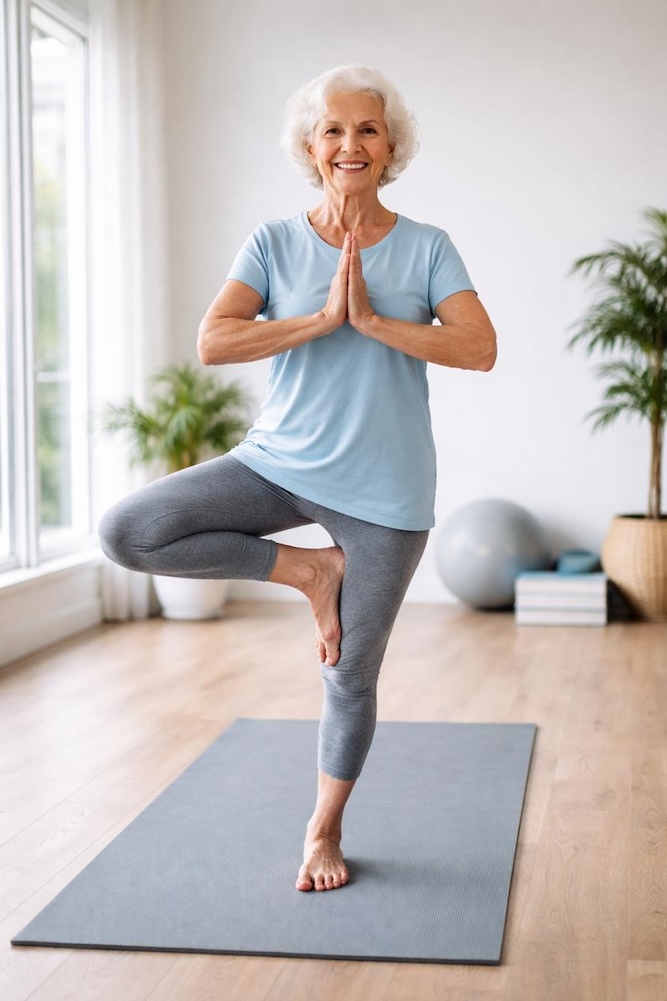
1. Single leg stands
All exercises build strength; however, some activities are more effective for fixing balance issues than others. Single-leg stands are one option, as they require you to engage the muscles needed to maintain your upright balance.
For these exercises, start slowly, shifting your weight onto one foot while lifting the other off the floor. Hold the position for several seconds before switching to the other foot. Over time, stability improves, increasing coordination and comfort when moving around.
2. Sit-to-stands
According to experts, sit-to-stand exercises increase leg strength and fixing balance issues. They are also easier to do than squats and other similar exercises that require more stability than you’re comfortable with.
Sit-to-stands require only a sturdy chair to sit on and a stable surface to hold onto when needed. Sit with your feet flat on the ground. Then lean forward, engaging your gluteal and leg muscles to lift you into a standing position. Then sit down again, using the stable surface only when needed.
3. Tai Chi & yoga
Tai chi uses gentle, steady movements that increase strength and coordination. According to recent studies, this practice also improves and fixes balance issues in seniors. It’s believed that Tai Chi alters the center of gravity and gait, reducing fall risks in high-risk adults.
Yoga is another practice that uses calm, relaxing movements to increase strength, flexibility, and balance. Several poses are particularly beneficial for seniors, including tree pose, Warrior II, and chair pose. For those unable to perform traditional poses, chair yoga offers several of the same benefits.
4. Close your eyes
According to experts, as you age, visual changes alter your ability to detect hazards, spatial relationships, or judge distances. These limitations affect stability, often resulting in an injury and fall.
However, closing your eyes briefly during exercises may help to fix these visual functions affecting balance. Start slowly, only closing your eyes for a few seconds at a time. Monitor your balance, and as you become more comfortable, you can increase the closed-eye sessions.
Resources:
- NIA, Falls and raptures in Older Adults: Causes and Prevention
https://www.nia.nih.gov/health/falls-and-falls-prevention/falls-and-fractures-older-adults-causes-and-prevention - PMC, May 2015, Taking balance training for older adults one step further: the rationale for and a description of a proven balance training programme
https://pmc.ncbi.nlm.nih.gov/articles/PMC4419050/ - Mayo Clinic, Fitness
https://www.mayoclinic.org/healthy-lifestyle/fitness/in-depth/balance-exercises/art-20546836 - Johns Hopkins Medicine, Fall Prevention: Balance and Strength Exercises for Older Adults
https://www.hopkinsmedicine.org/health/wellness-and-prevention/fall-prevention-exercises - PMC, Dec. 27, 2018, Tai Chi Chuan can improve balance and reduce fear of falling in community dwelling older adults.
https://pmc.ncbi.nlm.nih.gov/articles/PMC6323335/ - Mindful Word, Jan. 23, 2023, The Benefits of Yoga For Seniors: Improving flexibility, balance, and strength
https://www.themindfulword.org/yoga-seniors-independent-life/ - Ace Fitness, June 18, 2015, Chair Yoga Poses/7 Poses for Better Balance
https://www.acefitness.org/resources/everyone/blog/5478/chair-yoga-poses-7-poses-for-better-balance/?srsltid=AfmBOopng2i3oEoMsJViWecWBLJKUor31vOYwJ2gLbpkczRlk12azZzT - Frontiers, Nov. 14, 2019, The Effect of Balance and Coordination Exercises on Quality of Life in Older Adults: A Mini-Review
https://www.frontiersin.org/journals/aging-neuroscience/articles/10.3389/fnagi.2019.00318/full
This content comprises informative and educational resources only and can not be considered as a substitute for professional health or medical guidance. Reliance on any information provided in this article is solely at your own risk. If you have any inquiries or apprehensions about your medical condition or health goals, talk with a licensed physician or healthcare provider.



Leave A Comment