
Depression is a mood disorder with symptoms that can vary in type from person to person. However, there are symptoms that may also warn of deeper issues that shouldn’t be ignored. Whereas milder symptoms can often be managed with treatment, more serious ones can affect all areas of life, causing unmanageable conditions.
Although the disorder often occurs on its own, it could be linked to a neurological or medical condition. These include Alzheimer’s, Parkinson’s, stroke, cancer, multiple sclerosis, or diabetes. Discuss any new symptoms, including those associated with depression, with your doctor or nurse to avoid further complications. For more information on dangerous symptoms to watch for, keep reading. Please note that the information below is for educational purposes only. Contact your doctor if you think you may have depression.
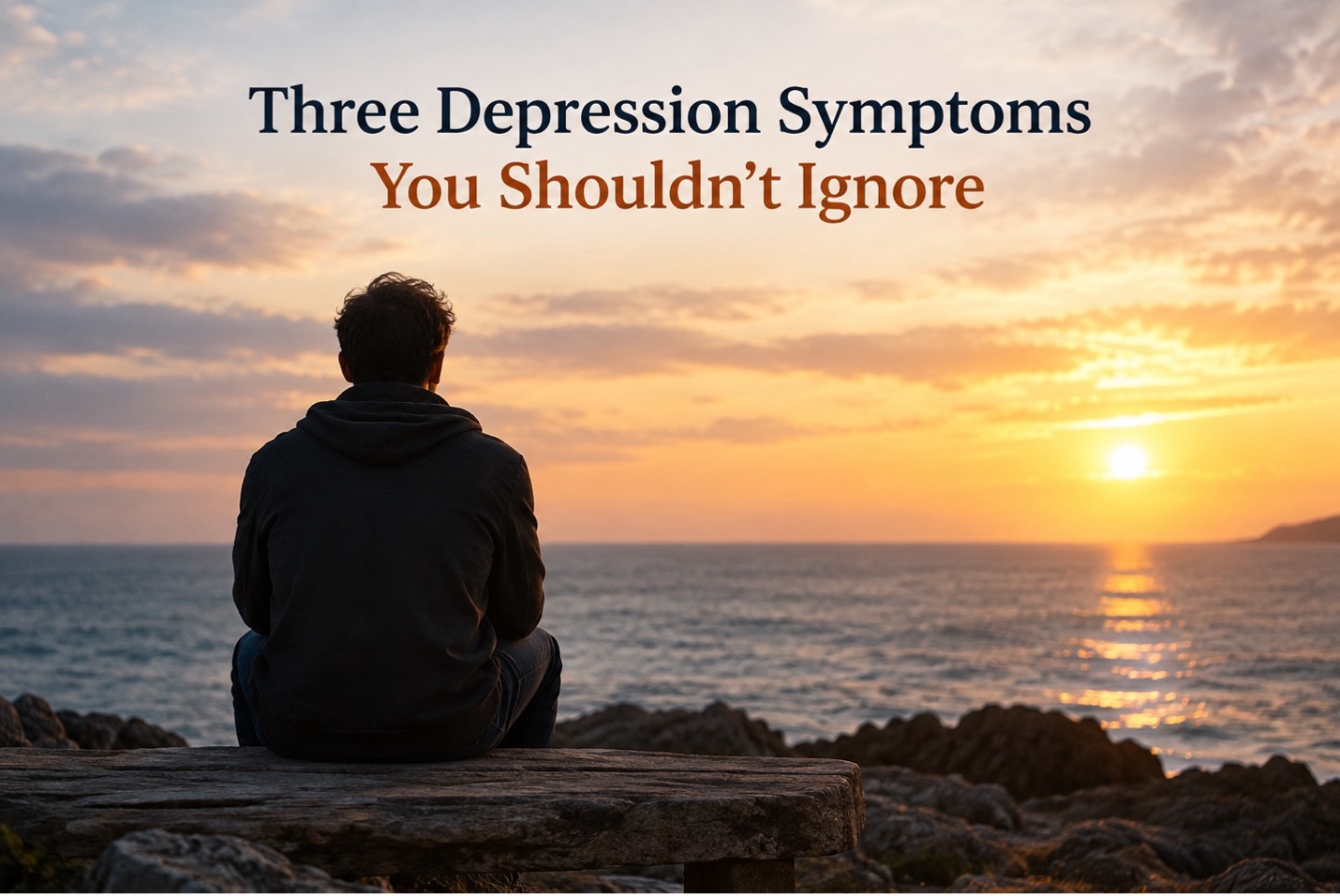
Red-Flag Depression Symptoms
According to experts, several symptoms could possibly occur during depressive episodes 1. These include sadness, irritability, anger, hopelessness, anxiety, or guilt. Some people also experience unexplained pain, memory problems, or difficulty focusing. The severity and combination of symptoms vary from person to person. However, a few depression symptoms are more concerning, including those discussed in the following sections.
1. Thoughts of death
Thoughts of death are some of the most frightening depression symptoms. Experts say these thoughts may focus on world atrocities, how life ends, or a person’s purpose on the planet 2. Some people even develop thanatophobia, which is an extreme fear of dying or death 3.
However, some people’s intrusive thoughts aren’t about a fear of death. These individuals may feel like a burden or be in pain and looking for a way out. Research suggests that suicidal thoughts may be particularly common among people with treatment-resistant depression 4.
What’s more frightening is that many of these patients may also attempt suicide. If thoughts of death, your own or otherwise, cross your mind, speak to a medical professional immediately.
2. Withdrawal from people
Lonely people often experience poor mental health, which then leads to higher instances of isolation. However, the opposite is also true, according to recent studies 5. These show that depression affects a person’s ability to maintain social interactions.
In fact, experts state that isolation is a common depression symptom 6. They continue by explaining that depressed people have trouble entering “we-experiences” with 2 or more people. This occurs from feeling different or misunderstood by others, even those they’ve had previous relationships with.
As these concerns increase, the more withdrawn someone with depression becomes. If untreated, they may eventually isolate themselves completely, which often worsens their depression.
3. Difficulty functioning in daily life
Another concerning symptom of depression is an altered ability to function in your daily life. For instance, studies show that appetite is often affected 7. While some people experience reduced appetite and weight loss, others binge eat unhealthy food options that cause weight gain.
Altered sleep patterns may also occur, including lack of sleep or insomnia 8. However, some depressed people sleep too much, including during the day, yet still feel tired. These issues often result in extreme fatigue, which is linked to emotional disturbance, physical weakness, and cognitive problems 9.
Another warning sign of depression is lack of self-care. As the condition worsens, a person feels less need to take care of themselves. This apathy often results from the dysfunction of the frontal lobe that caused the depression 10. It’s often difficult to resume daily functions without assistance.
Resources:
- Mayo Clinic, Depression (major depressive disorder)
https://www.mayoclinic.org/diseases-conditions/depression/symptoms-causes/syc-20356007 - Mental Health America, I think about death all the time,
https://screening.mhanational.org/content/i-think-about-death-all-time/ - My Cleveland Clinic, Thanatophobia (Fear of Death)
https://my.clevelandclinic.org/health/diseases/22830-thanatophobia-fear-of-death - Naviaux Lab, Major Depressive Disorder and Suicide
https://naviauxlab.ucsd.edu/science-item/depression-and-suicide/ - PMC, Oct. 31, 2022, Social Isolation, Loneliness, and Depressive Symptoms: A Twelve-Year Population Study of Temporal Dynamics
https://pmc.ncbi.nlm.nih.gov/articles/PMC9938924/ - Frontiers, Aug. 4, 2022, An Illness of isolation, a disease of disconnection: Depression and the erosion of we-experiences
https://www.frontiersin.org/journals/psychology/articles/10.3389/fpsyg.2022.928186/full - Frontiers, Nov. 20, 2013, From weight loss to weight gain: appetite changes in major depressive disorder as a mirror into brain-environment interactions
https://www.frontiersin.org/journals/psychology/articles/10.3389/fpsyg.2013.00873/full - PubMed, Dec. 12, 2014, Sleep Disturbances in Depression
https://pubmed.ncbi.nlm.nih.gov/26055669/ - PMC, Oct. 2011, Fatigue as a Residual Symptom of Depression
https://pubmed.ncbi.nlm.nih.gov/26055669/ - Josselyn, Why Self-Care is Hard for Depressed Individuals
https://www.josselyn.org/blog/why-self-care-is-hard-for-depressed-individuals/?cn-reloaded=1
This content comprises informative and educational resources only and can not be considered as a substitute for professional health or medical guidance. Reliance on any information provided in this article is solely at your own risk. If you have any inquiries or apprehensions about your medical condition or health goals, talk with a licensed physician or healthcare provider.




Leave A Comment