
Fear isn’t a pleasant emotion, but we all experience it at times. Usually it’s short-lived, caused by storms, nighttime noises, or other brief, often harmless, events. However, some concerns are hard to overcome and cause constant feelings of fear. Over time, mental health may suffer, worsening your already delicate condition.
Neurological factors may also lead to chronic issues, including anxiety, panic attacks, or hypervigilance. Fear may also arise from medical conditions, such as thyroid problems or hormonal imbalances. They may also result from your lifestyle choices. For more information about what causes your ongoing feelings of fear, keep reading.
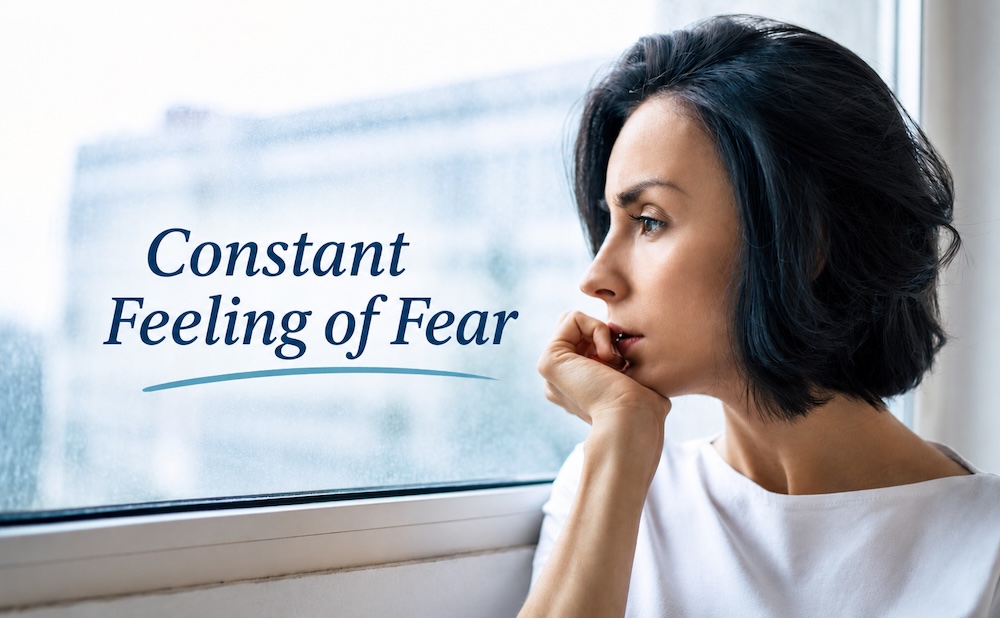
Constant Feeling of Fear
Experts believe that fear causes rapid breathing, an increased heart rate, restlessness, and racing thoughts. These feelings occur when you’re threatened, in danger, or see or hear something frightening. Although fear can protect you, you may avoid living your life or trying new things when you’re always afraid. Learning the cause and how to cope with it may help you lead a healthier life.
Causes of constant state of alarm
While researchers don’t know what exactly might be causing anxiety or excess fear, they believe that a few conditions could play a major role, such as thyroid issues, hormonal disorders, and others. Also, a small part of your brain, called amygdala, plays a significant role in your emotions. When there are problems with how the amygdala works, it can cause disruptive feelings.
They also note that anxiety disorders frequently cause panic, uneasiness, dread, irritability, and obsessive thoughts. They mention that these symptoms are often far worse than the situation warrants, causing constant feelings of fear. Several disorders are on this list, including generalized anxiety disorder (GAD), social anxiety, separation anxiety, selective mutism, and phobias.
Although it is no longer considered an anxiety disorder, post-traumatic stress disorder (PTSD) is also linked to chronic fear 3. The condition occurs after an immensely frightening or stressful event. Distressing memories, nightmares, and severe emotional distress are triggered when you’re reminded of the initial event.
Experts have also linked hormonal imbalances to constant feelings of fear. Stress causes the release of adrenaline and cortisol, which is fine in small doses. But chronic stress contributes to anxiety, insomnia, and other symptoms.
Perimenopause lowers estrogen, progesterone, and serotonin levels while increasing cortisol, which alters your emotional responses. The overproduction of hormones from hyperthyroidism also causes fear-like responses, including anxiety and nervousness.
Of course, a constant feeling of fear isn’t always caused by a medical condition. Studies show that media news has a negative effect on mental health. Most news programs focus on political unrest, natural disasters, mass violence, and other concerning topics. The more media you consume, the worse your fears become.
How to feel safe again?
Coping mechanisms for your constant feelings of fear vary, depending on the cause. Discuss the best methods with your doctor or nurse, especially if your concerns are related to a medical condition.
However, talk therapy, also called Psychotherapy, can do wonders, by helping to manage constant fear and anxiety.
Another way of calming brain is meditation and yoga. Yoga is also believed to focus scattered energies, such as fear, and encourage self-realization. Concentrating on meditation and breathing techniques calms your mind and releases negative energy and fearful thoughts.
Exercise is also frequently recommended to manage mental health and improve your physical body. According to experts, movement distracts you from your concerns while decreasing muscle tension. It also increases your heart rate, releases feel-good hormones, and resets your panic response.
Although you may want to stay current, limiting your focus on news programs and other negative media outlets is vital. Doing so prevents worries and fears about world events you can’t control.
Resources:
- Medicare, Understanding Feelings of Fear
https://www.medicarementalhealth.gov.au/living-well/understanding-fear - My Cleveland Clinic, July 3, 2024, Anxiety Disorders
https://my.clevelandclinic.org/health/diseases/9536-anxiety-disorders - My Cleveland Clinic, November 4,2023
https://my.clevelandclinic.org/health/body/24894-amygdala - Mayo Clinic, Post-traumatic stress disorder (PTSD)
https://www.mayoclinic.org/diseases-conditions/post-traumatic-stress-disorder/symptoms-causes/syc-20355967 - APA, Oct. 22, 2024, Stress won`t go away? Maybe you are suffering from chronic stress
https://www.apa.org/topics/stress/chronic - Johns Hopkins Medicine, Perimenopause and anxiety
https://www.hopkinsmedicine.org/health/wellness-and-prevention/perimenopause-and-anxiety - Mayo Clinic, Oct. 14, 2025, Thyroid disease: Can it affect a person’s mood?
https://www.mayoclinic.org/diseases-conditions/hyperthyroidism/expert-answers/thyroid-disease/faq-20058228 - PMC, June 13, 2025, Impact of Media-Induced Uncertainty on Mental Health: Narrative-Based Perspective
https://pmc.ncbi.nlm.nih.gov/articles/PMC12175740/ - Harvard Health Publishing, Can exercise help treat anxiety?
https://www.health.harvard.edu/blog/can-exercise-help-treat-anxiety-2019102418096 - The Yoga Institute, Overcoming Fear and Yoga
https://theyogainstitute.org/overcoming-fear-and-yoga
This content comprises informative and educational resources only and can not be considered as a substitute for professional health or medical guidance. Reliance on any information provided in this article is solely at your own risk. If you have any inquiries or apprehensions about your medical condition or health goals, talk with a licensed physician or healthcare provider.




Leave A Comment