
As the strongest bone in the human body, the femur is difficult to break, though not impossible. Severe accidents or medically related bone weakness usually cause such damage in seniors. Though recovery isn’t a guarantee in elderly individuals with a broken femur, it is possible, and early surgery and rehab improve their chances. Age, health conditions, and whether the treatments are in- or outpatient are also important to consider.
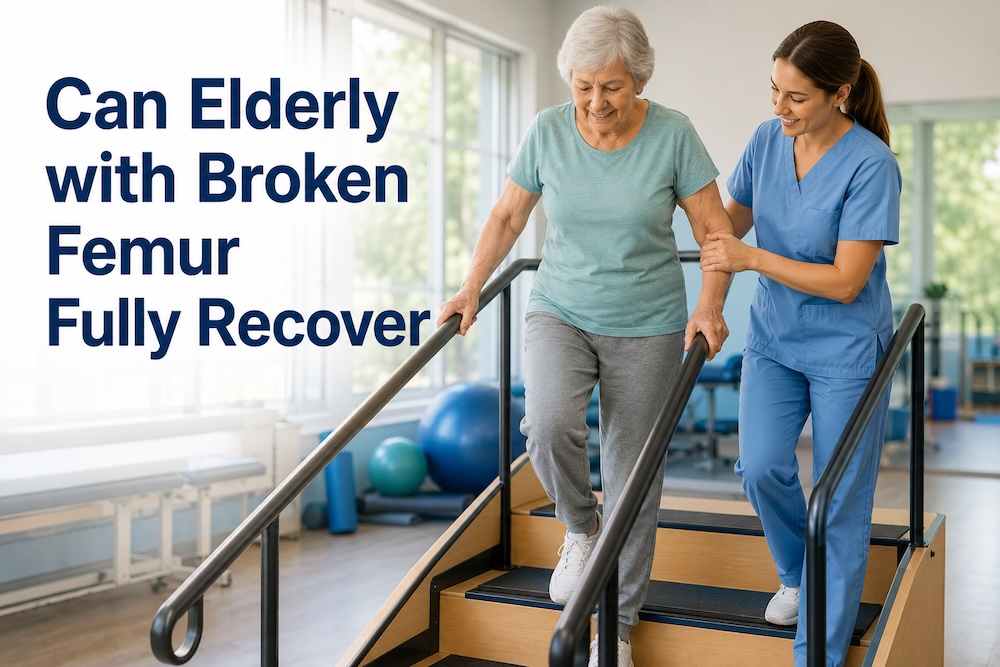
Rehabilitation after a broken femur includes physical therapy to improve strength and balance. Occupational therapy reduces fall risks and helps you perform daily activities. Your doctor may also recommend gait training or assistive devices to help you walk safely. For more information on recovery methods, keep reading.
Elderly With Broken Femur Recovery
A recent study states that femur fractures are the second-most common fractures suffered by the elderly 1. It also mentions that these injuries have an increased risk of complications, including non-union, malunion, and infection. Medical conditions and age may also be factors affecting mortality rates. However, recovery is often improved with the proper care, including the treatment methods discussed below.
Early surgery
Experts define early surgery as occurring within 48 hours of hospital admission after a broken femur 2. Elderly patients undergoing such quick surgery also have a significantly lower mortality rate than those who wait for care.
Not only does early surgery reduce mortality risks, but it also has several other notable benefits. Studies show that there were fewer complications before, during, and after early surgery 3. Hospital stays were also shorter, allowing seniors to return home sooner.
Seniors are more likely to regain their walking ability than individuals whose surgeries were delayed. Of course, these benefits depend on certain factors, including overall health and age. Experts state that postoperative care, including physiotherapy, plays a role in recovery after early surgery 4.
Intensive rehab therapy
The goal of rehab therapies is to regain strength, mobility, and independence after an injury. Although several options are available, two intensive rehabs are most frequently recommended for elderly people with a broken femur.
Physical therapy offers several benefits, including regaining lost strength, flexibility, and range of motion 5. The exercises are customized for each person to ensure they are recovering their strength safely while meeting their goals. Physical therapy also assists in pain management, often reducing the medications required.
Occupational therapy focuses on regaining the skills needed for daily living to recover independence after a broken femur 6. Home safety is also considered. Adding bathroom handrails, removing tripping hazards, and even the assistance of a caregiver may be recommended 7.
Nutrition
Proper nutrients maintain healthy tissue and bone strength. However, elderly people with a broken femur must also monitor their nutritional requirements to improve recovery. Such measures are vital since certain nutrients aid in tissue growth and repair.
For instance, most of the calcium and phosphorus consumed are used by the bones. Vitamin D aids in calcium absorption, vitamin K increases bone density, and vitamin C builds collagen. Iron improves circulation, ensuring those nutrients reach the bone, while protein aids in bone growth 8.
A balanced meal plan will ensure you’re getting all the nutrients required for your recovery. It will likely include dairy, leafy greens, fruit, small or fatty fish, lean meats, nuts, and beans.
Resources:
- PMC, Sept. 10, 2010, Mortality After Distal Femur Fractures in Elderly Patients
https://pmc.ncbi.nlm.nih.gov/articles/PMC3048257/ - PubMed, Feb. 2024, Early surgery improves survival after femoral fractures in the elderly: A retrospective review of 502 fragility fractures
https://pubmed.ncbi.nlm.nih.gov/38134490/ - Frontiers, Feb. 26, 2024, Benefits of surgical treatment within 48h of proximal femoral fracture in centenarians: a retrospective cohort study
https://www.frontiersin.org/journals/surgery/articles/10.3389/fsurg.2024.1349434/full - PMC, Aug. 30, 2020, No rest for elderly femur fracture patients: early surgery and early ambulation decrease mortality
https://pmc.ncbi.nlm.nih.gov/articles/PMC7456623/ - OrthoInfo, Femur Shaft Fractures (Broken Thighbone)
https://orthoinfo.aaos.org/en/diseases–conditions/femur-shaft-fractures-broken-thighbone/ - Health in Aging, Fractures
https://www.healthinaging.org/a-z-topic/fractures/lifestyle - MedlinePlus, Femur fracture repair – Discharge
https://medlineplus.gov/ency/patientinstructions/000166.htm - Mass General Brigham, Jan. 13, 2025, The Best Foods for Bone Healing After a Fracture
https://www.massgeneralbrigham.org/en/about/newsroom/articles/best-foods-for-bone-healing-after-fracture
This content comprises informative and educational resources only and can not be considered as a substitute for professional health or medical guidance. Reliance on any information provided in this article is solely at your own risk. If you have any inquiries or apprehensions about your medical condition or health goals, talk with a licensed physician or healthcare provider.



Leave A Comment