
Sepsis is an unexpected response to infection that affects multiple organs and impairs their function. Though early treatment reduces the severity of the condition, many people still suffer long-term effects. However, post-sepsis rehab may prevent the worst of these issues or further complications.
Rehab may involve complex medical problems, so your doctor may recommend IV therapy and other restorative therapies. Trained staff monitor your condition and tailor their care accordingly. You may also require physical therapy, occupational therapy, and nutritional education to improve your overall health and regain your independence. For more information on post-sepsis care, keep reading.
Why Post-Sepsis Rehab Is Important for Recovery
According to experts, sepsis is a complication of infection 1. It may cause shallow breathing, light headedness, sweating, shivering, altered mental states, sleepiness, and other symptoms. Studies show that IV therapy often improves cardiac and organ function and oxygen delivery 2. You may also benefit from other rehab options to aid in your recovery, which we’ll discuss in the following sections.
Regain strength
After treatment for sepsis, you may notice several physical symptoms affecting your daily life. These include breathlessness, weight loss, difficulty sleeping, and body aches 3. Extreme weakness may also occur, likely due to muscle loss from inactivity during your illness.
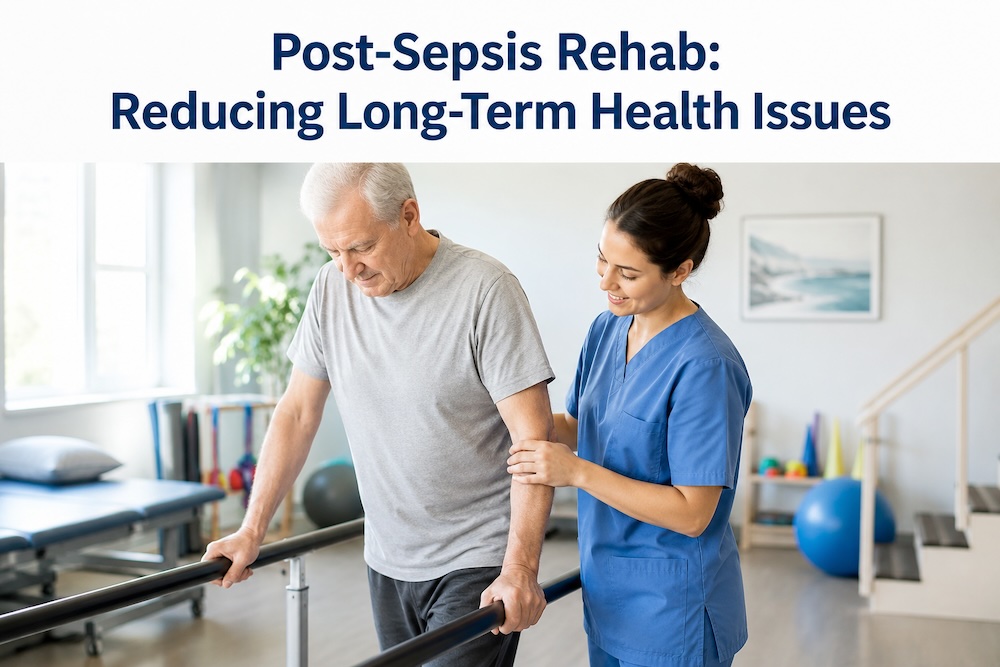
Studies show that early post-rehab rehab often does improve physical symptoms and increases strength 4. Such treatment may begin after you are released from hospital, with active bedside exercise and physical therapy incorporated into your routine. This therapy helps significantly with managing your symptoms and rebuilding strength.
Experts also state that recovery time varies, from a few weeks to several months 5. It’s recommended to start slowing, with light, gentle exercises, which are increased gradually. Over time, energy levels, muscle strength, balance, and flexibility improve.
Restore mental health & fatigue
Physical symptoms aren’t the only complications of sepsis recovery. Experts state that many people also experience mental health issues, including confusion, nightmares, concentration problems, depression, fatigue, or insomnia 6.
Studies also show that many of these symptoms don’t occur right away, since patients first experience post-sepsis euphoria 7. These feelings then shift into shock and trauma due to their close proximity to death.
Your post-sepsis altered state of mind may benefit greatly from rehab therapies rather than coping with your recovery alone. Physical therapy may help with fatigue as well as with sleep. Occupational therapy usually helps with performing the daily tasks you may struggle with. Trained professionals and loved ones also offer emotional support, which allows you to cope with mental health concerns.
Maintain good nutrition
Exercise and emotional support are crucial aspects of post-sepsis rehab. However, a healthy diet also benefits your body and mind. They need nutrients to rebuild muscle tissue and improve brain function 8.
Unfortunately, loss of appetite, nausea, fatigue, or altered taste often result from sepsis. These symptoms may prevent you from feeling hungry or enjoying large meals. To prevent further complications, it may be best to consume smaller snacks throughout the day. Smoothies, soups, and other light, yet nutritious, options are great alternatives.
Protein-rich items, such as fatty fish, soy, eggs, and fruits, help build muscle mass. You can also eat veggies, dairy products, and lean meats to gain all the nutrients your body needs to recover safely.
Post-sepsis rehab can play an important role in preventing long-term complications and improving quality of life. Through physical therapy, emotional support, and proper nutrition, many people regain strength, rebuild independence, and return to daily activities more confidently. While recovery takes time, the right rehabilitation plan helps support both physical and mental healing.
Resources:
- Mayo Clinic, Sepsis
https://www.mayoclinic.org/diseases-conditions/sepsis/symptoms-causes/syc-20351214 - PMC, Oct. 1, 2023, Intravenous Fluid Therapy in Sepsis
https://pmc.ncbi.nlm.nih.gov/articles/PMC9463107/ - CDC, Sept. 25, 2025, Managing Recovery from Sepsis
https://www.cdc.gov/sepsis/living-with/index.html - PMC, March 31, 2022, Effects of early rehabilitation in sepsis patients by a specialized physical therapist in an emergency center on the return to activities of daily living independence: A retrospective cohort study
https://pmc.ncbi.nlm.nih.gov/articles/PMC8970360/ - Sepsis Trust, Sepsis Recovery & Post Sepsis Syndrome
https://sepsistrust.org/get-support/sepsis-recovery-post-sepsis-syndrome/ - RWJBH, Managing Sepsis After Discharge
https://www.rwjbh.org/treatment-care/sepsis/managing-sepsis-after-discharge/ - PMC, May 1, 2021, The physical and mental impact of surviving sepsis – a qualitative study of experiences and perceptions among Swedish sample
https://pmc.ncbi.nlm.nih.gov/articles/PMC8088073/ - Sepsis Alliance, Sepsis and Nutrition (Post Sepsis)
https://www.sepsis.org/sepsisand/nutrition-post-sepsis/
This content comprises informative and educational resources only and can not be considered as a substitute for professional health or medical guidance. Reliance on any information provided in this article is solely at your own risk. If you have any inquiries or apprehensions about your medical condition or health goals, talk with a licensed physician or healthcare provider.





Leave A Comment